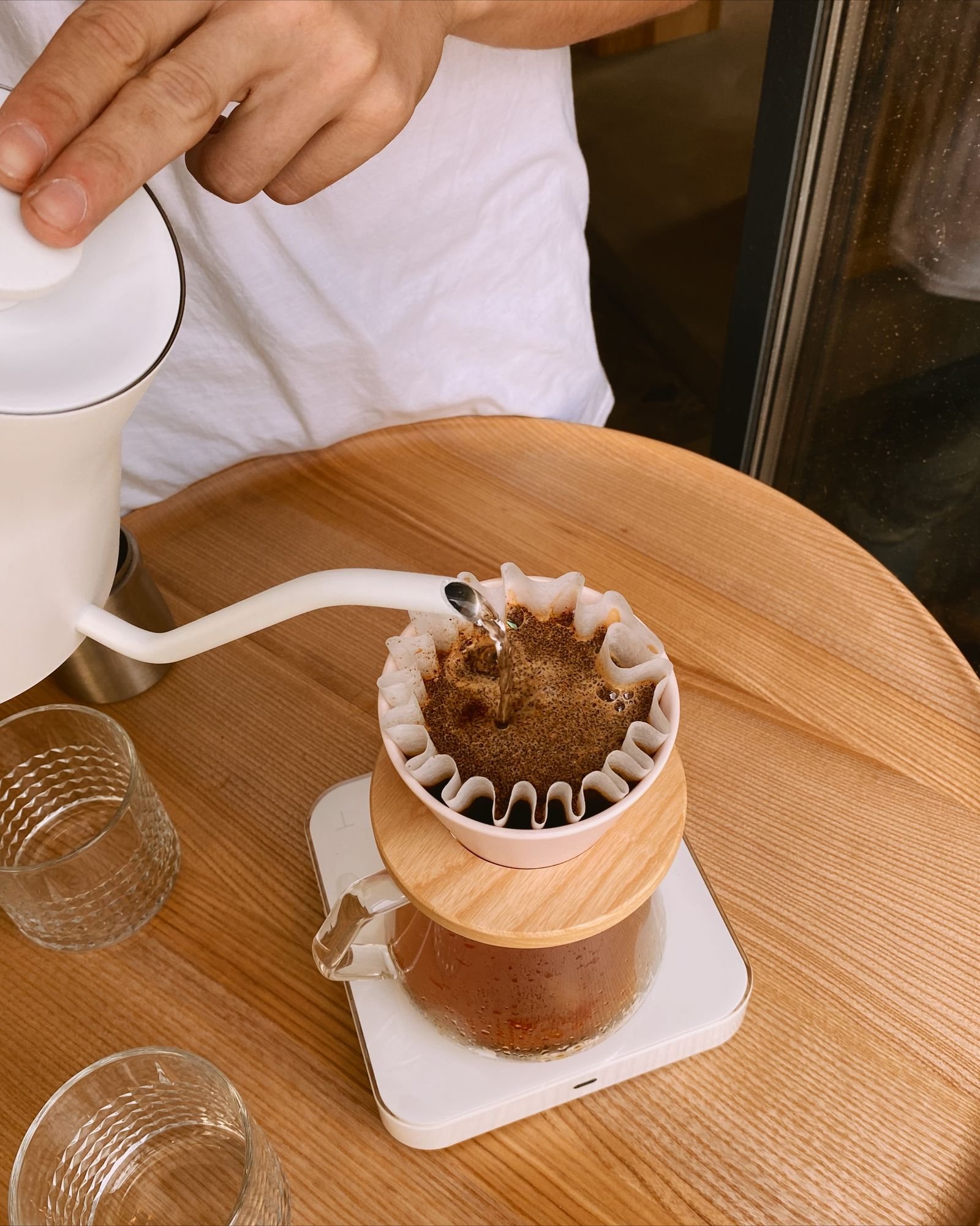
Introduction
Learning how to pour over coffee is one of the most rewarding skills a home brewer can pick up. Unlike a push button machine that hides the process behind a wall of plastic and steam, pour over puts every variable in the brewer’s hands. The method is simple on the surface yet endlessly tunable underneath. Pour over refers to a style of filtered brewing where hot water is poured by hand over a bed of ground coffee sitting in a paper or cloth filter. Gravity does the rest, pulling the liquid through and leaving the spent grounds behind. The result is a cup with remarkable clarity. Bright acids, subtle sweetness, and the distinct fingerprint of the bean’s origin all come through with a transparency that heavier methods tend to smear together. This article walks through the entire process from zero. By the end, a beginner with nothing but a kettle and a cone will know exactly how to dial in a repeatable, delicious cup at home.
For a complete guide to the French press method, see our French press coffee guide.
Why Pour Over Coffee Is Worth Your Time
Pour over rewards attention with flavor. The main reason enthusiasts keep a dripper on the counter is clarity. Because the water contacts the grounds only briefly and the filter captures most oils and fine sediment, the cup reads clean from first sip to last. Layered flavors that stay buried in a French press or get flattened by espresso extraction rise to the surface. A washed coffee from a high altitude farm will taste like the fruit and flower notes the grower worked to preserve, not like the brewing hardware.
The method also puts origin front and center. Coffee is an agricultural product, and different regions express themselves differently. A delicate, tea like cup shows off the character of the land and the processing method far better than a method that forces everything toward a single bold profile. For drinkers curious about where coffee comes from, pour over coffee keeps those details intact and becomes the most honest window into that story.
Other methods have their place. Cold brew trades brightness for a smooth, low acid concentration built over many hours. Espresso delivers density and crema through pressure. The French press produces a heavy, full bodied cup. None of these are wrong, but they each blur the fine details that a filter cone preserves.
Yunnan beans are a particularly good match for this method. The province’s high grown lots tend to show clean acidity and a silky sweetness that shines when nothing else gets in the way. As the region’s specialty sector matures, more roasters are steering these coffees toward the filter cone rather than the espresso basket, and the results speak for themselves.
Essential Equipment for Pour Over
Good news for newcomers: the gear list is short and the entry cost stays low. A few well chosen tools make the difference between a muddy cup and a glowing one.
The dripper sits at the center. The Hario V60 is the most popular starter for a reason. Its cone shape and single large exit hole encourage a bright, complex, articulate cup, though it demands a steady hand. The Chemex uses thicker bonded paper and a dramatic hourglass body, yielding an exceptionally clean and light brew. The Kalita Wave takes a flat bottom with three holes, which makes extraction more even and forgiving for beginners. Each design nudges the cup in a different direction, and all three are worth exploring.
A grinder matters more than the dripper. Burr grinders come in two families. Conical burr models crush beans between a center cone and a ring, running cooler and quieter while producing a slightly broad particle spread. Flat burr models use two parallel rings for a more uniform grind, favored by those chasing precision. Either style beats a whirling blade grinder, which shatters beans into an uneven dust and boulder mix that brews unevenly.
A gooseneck kettle is the quiet hero of the setup. Its slender, curved spout lets the brewer control flow rate and target the stream with pinpoint accuracy. Pouring from a standard kettle makes it hard to avoid flooding the bed or missing it entirely. The difference shows up immediately in consistency.
An electronic scale that reads to 0.1 gram turns guesswork into repeatability. Coffee is sensitive to small changes in dose and yield, and eyeballing ratios invites frustration. A timer built into the scale or a phone app tracks the brew from the first drop.
Filter paper deserves a moment of thought. Washed papers taste neutral after a quick rinse, while unbleached options can carry a faint papery note if skipped. Rinsing any paper with hot water before brewing removes that risk and warms the vessel at the same time.
A thermometer is optional thanks to kettles with built in temperature control. For those using a stovetop kettle, a simple probe confirms the water has cooled off the boil into the right zone. More background on gear choices appears in the James Hoffmann guide and in reporting from Perfect Daily Grind.
The Perfect Pour Over Parameters
Consistency starts with numbers. The values below reflect widely cited brewing standards from the SCA standards along with guidance drawn from professional tasters and competition practice. Treat them as a reliable starting point, then adjust to taste.
| Parameter | Recommendation |
|---|---|
| Water temperature | 90 to 96°C (SCA baseline near 93°C) |
| Brew ratio | 1:15 to 1:17 coffee to water (start at 1:16) |
| Grind size | Medium fine, like table salt or fine sea salt |
| Total brew time | About 2:30 to 4:30 minutes, depending on the dripper |
| Bloom | Twice the coffee weight in water, rest 30 to 45 seconds |
Water temperature should land between 90 to 96°C. The SCA baseline sits near 93°C. Lighter roasts and denser, higher grown beans benefit from the higher end of that range, while darker roasts extract more easily and prefer the lower end to avoid harshness.
The brew ratio runs from 1:15 to 1:17 coffee to water, with 1:16 a sensible default. At 1:16, 15 grams of coffee meets 240 grams of water. A tighter ratio like 1:15 gives a stronger cup, and a longer one like 1:17 lightens it.
Use a medium fine grind, with a texture close to table salt or fine sea salt. This sits coarser than espresso but finer than a French press. The goal is a bed that slows water enough for extraction without choking the flow.
Total brew time runs from about 2:30 to 4:30 minutes depending on the device. A V60 typically finishes in about 2:30 to 3:30, while the thick Chemex filter stretches the draw to around 3:30 to 4:30. The Kalita Wave sits comfortably in the middle.
The bloom, or pre infusion, uses twice the coffee weight in water. For 15 grams of grounds, pour 30 grams of water and wait 30 to 45 seconds. This gives trapped carbon dioxide a chance to escape so the main pour can extract evenly.
Step-by-Step: How to Pour Over Coffee
With equipment ready and parameters set, here is the pour over coffee recipe in eight straightforward stages. Read through once, then brew along.
- Prepare and preheat. Place the dripper on the scale, insert the filter, and rinse it with hot water. This washes away paper taste and warms the cone. Discard the rinse water.
- Weigh and grind. Measure 15 grams of coffee and grind it to a medium fine texture. Add the grounds to the damp filter and gently level the bed.
- Confirm the setup. Make sure the paper is fully saturated and the server below is empty before the first real pour, so nothing dilutes or taints the brew.
- Bloom. Start the timer and pour 30 grams of water over the grounds in a slow spiral. Let the bed rise and bubble for 30 to 45 seconds.
- First pour. From the bloom, pour in gentle circles out to about 60 grams total. Keep the stream centered and avoid digging a crater in the bed.
- Second pour. Continue adding water in steady circles up to 240 grams, which is 15 grams times 16. Pause if the level drops too low, and keep the bed evenly saturated.
- Wait for drawdown. Let the remaining water filter through. The whole process from first pour to last drop should take about 3 to 4 minutes.
- Swirl and serve. Give the server a gentle swirl to mix the layers, then pour and enjoy. Note the flavor so the next cup can be tuned.
Following these steps removes the mystery. Each variable is visible and adjustable, which is exactly why learning how to pour over coffee feels less like following a recipe and more like learning a craft.
How Yunnan Coffee Excels in Pour Over
Yunnan has quietly become one of the most interesting origins for filter brewing. The geography sets the stage. Coffee here grows at elevations from 1000 to 2000 meters, and higher altitude slows the cherry’s maturation. Slower growth concentrates sugars and acids, producing the clean, high toned profile that pour over reveals best.
Processing style reinforces that clarity. Washed coffees from areas like Puer and Lincang are prized for a crisp, tea like character. The washed method removes the fruit before drying, so the cup stays transparent and the bean’s own notes lead. This makes Yunnan washed lots a natural fit for a V60 or Kalita, where nothing hides the detail.
The region’s quality curve is steepening. Yunnan’s specialty coffee rate climbed to 41.7 percent in 2026, a clear signal that more of the harvest now meets the standards discerning filter brewers want. That growth means a wider choice of carefully processed lots reaching roasters and home kits alike.
For those deciding where to start, two regions stand out. Baoshan sits at high elevation and tends to deliver structured, bright cups with a long finish. Puer offers a more balanced profile that appeals to a broad range of palates. Both reward careful brewing.
On processing, washed coffees suit drinkers who value cleanliness and clarity, while natural processed lots bring rounder fruit sweetness for those who want a juicier cup. Either way, the Yunnan coffee flavor profile explains the tasting notes in depth, and the Yunnan coffee growing regions map shows where each cup comes from.
Common Mistakes to Avoid
Most failed pour overs trace back to a short list of avoidable errors. Side stepping them saves frustration.
Grinding too fine is the classic culprit. A powdery bed chokes the flow, water lingers, and the cup turns bitter and astringent from over extraction. When the drawdown drags past four minutes, the grind is usually the cause.
Pouring straight from a boiling kettle at 100°C scalds the grounds. The harsh, ashy notes that follow are not the bean’s fault but the water’s. Let the boil settle into the 90 to 96°C window before brewing.
Brewing too long also pushes extraction past its sweet spot. Once the total time exceeds four minutes on a V60, balance tends to collapse. Tighten the grind slightly coarser or speed the pours to recover.
Skipping preheat is an easy oversight. A cold dripper and server steal heat from the slurry, lowering the effective temperature and slowing extraction. Thirty seconds of rinsing with hot water solves it.
Using stale beans closes the loop. Coffee past four weeks off roast loses the volatile aromatics that make pour over sing. Freshness is not a luxury here, it is the foundation of the clarity the method promises.
Pour Over vs Other Brewing Methods
Choosing a brewer means choosing a flavor philosophy. Pour over stands apart from the other common home methods in clear ways.
Against cold brew, the contrast is time and tone. Cold brew steeps grounds in cold water for many hours, pulling out low acidity and a smooth, sweet body. Pour over finishes in minutes and keeps acidity high and the cup lively. One suits a slow morning planned ahead, the other a quick ritual with immediate results. A full cold brew coffee recipe sits on the site for those curious about the long route.
Espresso is a different beast. It forces water through a puck under pressure, producing a concentrated, syrupy shot with crema. Pour over stays clear and tea like, and it asks for the hand rather than the machine. Espresso builds a bold foundation for milk drinks, while pour over celebrates the bean alone.
The French press takes the opposite tack. It lets grounds steep and then separates them with a metal screen, leaving oils and fine sediment in the cup for a heavy, rustic body. Pour over filters those out, yielding a cleaner, more defined drink. The press is forgiving and hands off, but pour over rewards the brewer with precision.
Make Your First Pour Over Today
The path from curious to confident is shorter than it looks. A dripper, a burr grinder, a gooseneck kettle, and a 0.1 gram scale cover the essentials. Start with 15 grams of medium fine coffee, 240 grams of water at 92 to 94°C, a 30 to 45 second bloom, and a total time near 3 to 4 minutes. Those numbers alone will produce a clean, balanced cup, and every brew after is a small experiment in tuning.
Yunnan beans make an excellent first subject. Their clean, high altitude character shows exactly what pour over does best, and the growing range of specialty lots means there is always something new to try. When the gear is in hand and the water is at temperature, the only remaining step is to pour.
For those ready to source beans, the guide on where to buy Yunnan coffee points to reliable options. The first cup of pour over coffee will not be perfect, and that is the point. Each pour teaches the next, and within a week the ritual becomes second nature.
Frequently Asked Questions
What is the best ratio for pour over coffee?
The reliable range is 1:15 to 1:17 coffee to water, and 1:16 is the best place to start. That means 15 grams of coffee with 240 grams of water. A ratio of 1:15 yields a stronger cup, while 1:17 keeps it lighter. Adjust within that window based on the bean and personal taste.
What water temperature should I use?
Aim for 90 to 96°C. The middle of that range works for most roasts, and Yunnan beans do well at 92 to 94°C. Use the higher end for light roasts and the lower end for dark roasts. Water straight off a rolling boil at 100°C is too hot and will scorch the grounds.
How long should the brew time be?
Total brew time should be about 3 to 4 minutes including the bloom. A V60 usually lands near 2:30 to 3:30, while a Chemex with its thicker filter runs closer to 3:30 to 4:30. If the cup finishes well past four minutes, the grind is likely too fine.
Can I use pre-ground coffee for pour over?
It is possible but not recommended. Pre ground coffee loses aroma and flavor quickly once exposed to air, and the grind is rarely tuned to the medium fine range pour over needs. Grinding fresh right before brewing preserves the clarity that makes the method worth doing.
Which grind size is best for pour over?
Medium fine is the target, with a feel close to table salt or fine sea salt. This is coarser than espresso grind and finer than a French press grind. The right size slows the water enough for full extraction without stalling the draw. Freshly ground beans from where to buy Yunnan coffee will taste their best at this setting.
Leave a Reply