How many ways are there to brew coffee–and which one matches your taste? The answer matters more than you might think. Brewing methods are the extraction techniques that determine strength, body, and flavor clarity in your cup. Choose wrong, and even the finest Yunnan beans can taste flat or bitter. Choose right, and a $10 bag becomes a café-quality experience.
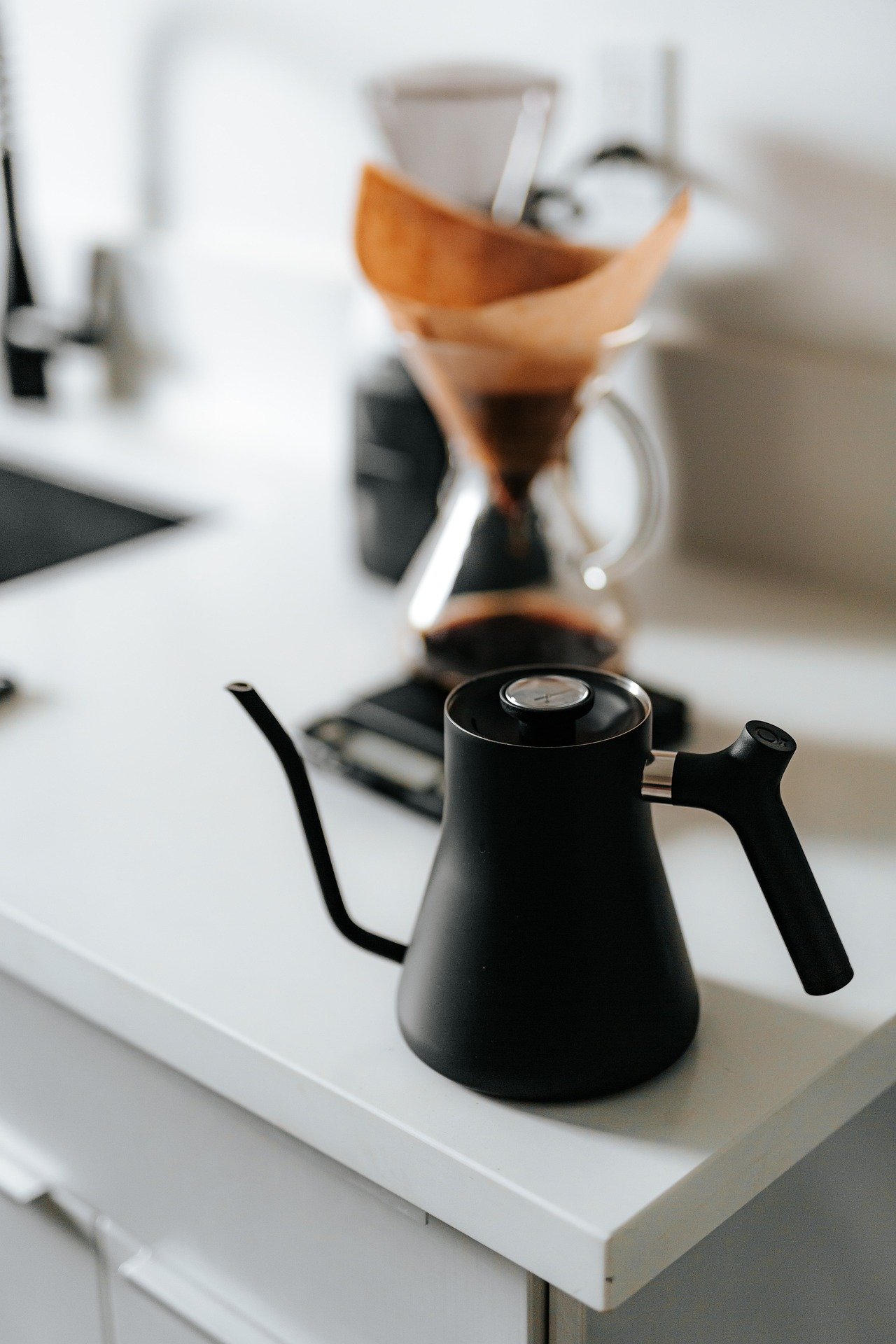
This guide covers six core methods–pour over, French press, cold brew, iced coffee, drip machine, and espresso–each analyzed for extraction time, body profile, and how Yunnan beans perform. Whether you are a weekend ritualist or a weekday efficiency seeker, there is a method waiting for you.
Pour Over: The Clarity-Focused Method
Pour over is the gold standard for highlighting origin character. Hot water flows slowly through a bed of coffee grounds, passing through a paper or metal filter that traps oils and fine particles. The result is a clean, bright cup where acidity and floral notes shine without interference.
The extraction logic is straightforward: gravity pulls water through compacted grounds at a controlled rate. Paper filters–common in V60, Chemex, and Kalita Wave brewers–remove nearly all oils and sediment, producing a tea-like clarity that reveals subtle tasting notes. Metal filters, used in the AeroPress or some reusable designs, allow more oils through, yielding a slightly heavier body while still maintaining clarity.
Pour over demands attention. Water temperature, pour speed, and grind consistency each shift the balance. Too fast, and the water channels through unevenly, leaving some grounds underextracted and sour. Too coarse a grind, and water rushes through without pulling enough sugars, producing a thin, acidic cup. The ideal grind sits at medium-fine, similar to sea salt, with a steady pour rhythm that keeps the bed level.
Yunnan beans excel here, particularly high-altitude washed lots from Pu’er and Lincang. These coffees develop slowly at 1,000–2,000 meters, building dense sugars and bright citric acidity. When poured correctly, they express a clean tea-like finish with hints of orange peel and jasmine–a profile that disappears entirely under immersion brewing. The acidity that makes them fragile in a French press becomes their superpower in pour over.
For readers seeking the complete technical breakdown–ratios, bloom timing, pour patterns–the pour over coffee guide covers every variable in depth.
French Press: The Full-Body Option
French press is the opposite of pour over. Instead of filtering water through grounds, you steep them together, then press a metal mesh plunger to separate the brew. This immersion method retains every oil and microscopic particle, producing a cup with heavy body, rich texture, and a silky mouthfeel that paper filters simply cannot replicate.
The extraction logic relies on time, not flow rate. Grounds saturate completely in hot water, extracting evenly across the entire bed. No channeling. No uneven flow paths. Just steady, uninterrupted contact between water and coffee. The trade-off is clarity: those suspended particles and oils make the cup opaque and heavy, but they also carry flavor compounds that paper filters discard.
French press thrives on simplicity. No specialty dripper needed–just a glass carafe, a plunger, and a consistent grind. The target is medium-coarse, like coarse sea salt, which minimizes fines that slip through the mesh. Steep time lands at four minutes for most recipes; longer steeps extract more bitterness without adding much complexity.
Yunnan beans find a natural home here, especially sun-dried lots from Baoshan. The region’s natural processing builds berry and ferment depth that immersion brewing amplifies. Washed Pu’er lots, by contrast, taste clean but can feel muted under the heavy body French press imposes. For those who prefer sweetness over brightness, a Baoshan natural pressed for four minutes delivers a cup that tastes almost dessert-like–dark chocolate, dried fruit, and a velvety finish.
Read the complete French press tutorial, including step-by-step timing and troubleshooting, in the French press coffee guide.
Cold Brew: The Low-Acid, Smooth Path
Cold brew flips the extraction equation entirely. Instead of hot water, room-temperature or chilled water contacts coarse grounds for twelve to twenty-four hours. The slow, gentle process pulls sugars and soluble solids while leaving behind the harsh acids and bitter compounds that hot water liberates so readily.
The result is a concentrate that tastes surprisingly sweet even without added sugar. Acidity drops to near-zero. Body is soft and round. The cup reads more like a chocolate-malt beverage than traditional coffee–and that is exactly why cold brew appeals to drinkers who find regular coffee too sharp or stomach-friendly.
The extraction logic favors patience over precision. Since cold water extracts far more slowly than boiling water, contact time replaces temperature as the primary control variable. Longer steep equals stronger extraction–but only up to a point. Beyond twenty-four hours, over-extraction kicks in, pulling undesirable woody and astringent compounds from the grounds.
Yunnan beans shine differently here than in hot methods. Medium-dark roasts amplify the region’s natural caramel and brown-sugar notes, turning cold brew into something close to a coffee soda. Light-roast washed lots, by contrast, lose their bright citrus character to the low temperature and taste flat or grassy. The bean choice matters: reach for a Baoshan natural or a Pu’er medium-dark if you want sweetness; skip a light-roast washed if you want body.
The cold brew coffee recipe walks through ratio, steep time, and dilution so you can dial in your first batch.
Iced Coffee: The Hot-Brewed-Then-Chilled Style
Iced coffee and cold brew are often confused, but they are fundamentally different. Iced coffee starts as a proper hot extraction–pour over, French press, or drip–then is cooled rapidly by pouring it directly over ice. The ice does double duty: it chills the liquid instantly and dilutes it predictably, provided you weigh both the brew and the ice.
The extraction logic mirrors any hot method, but with one critical addition: dilution management. Brew at roughly double strength (a 1:12 coffee-to-water ratio instead of the usual 1:16), pour it over an equal weight of ice, and you end up with a properly balanced cup at serving temperature. Skip the strength adjustment, and you get watery disappointment within minutes as the ice melts.
This method rewards flexibility. Use your favorite hot brew–pour over for clarity, French press for body–and chill it immediately. The rapid temperature drop locks in aromatics that slow chilling would lose to oxidation. A pour-over concentrate over ice tastes brighter and more floral than cold brew, while a French press version carries richer, heavier notes.
Yunnan beans adapt naturally because their low acid profile stays smooth through the ice dilution curve. A washed Pu’er pour over over ice reads as clean and tea-like from first sip to last. A sun-dried Baoshan French press over ice turns sweet and berry-forward as the ice melts. Both work; both avoid the sharpness that high-acid origins sometimes show when chilled.
The complete iced coffee recipe covers the concentrate-over-ice technique with exact ratios and timing.
Drip Machine: The Automated Choice
Drip machine coffee gets a bad reputation among enthusiasts, but a good automatic brewer produces consistent, reliable cups with zero hands-on effort. The machine heats water to a SCA-certified range–typically 90–96°C–and distributes it evenly over grounds using a showerhead design. Paper filters trap oils and sediment, yielding a clean cup similar to pour over but with far less skill required.
The extraction logic is all about repeatability. Once you dial in the ratio–usually 1:15 to 1:17 for drip machines–the brewer does the rest. Grind size, water temperature, and contact time stay locked at factory settings. You get the same cup every morning, even on days when you would rather not think about coffee.
The catch is that automated drip machines rarely match the clarity of manual pour over. Even SCA-certified brewers distribute water less precisely than a skilled human hand, and the contact time is shorter, which can underextract slightly. The result is a cup that is dependable but less expressive–fine for a daily driver, less exciting for a weekend ritual.
Yunnan beans suit drip machines well at medium roast. The region’s balanced acidity and nutty cocoa base survive the shorter contact time without turning sharp, and the paper-filtered clean cup lets the origin character come through without the heaviness immersion methods add. A medium-roast Pu’er from a quality drip machine tastes steady, approachable, and consistently good.
Espresso: The Concentrated Base
Espresso is the most technical of the six methods, and the one that demands the most equipment. Freshly ground coffee is packed into a portafilter, and nearly boiling water is forced through at nine bars of pressure in twenty-five to thirty seconds. The result is a small, intense shot–roughly 30 milliliters–that serves as the foundation for lattes, cappuccinos, and americanos.
The extraction logic is pressure-driven, not gravity-driven. Nine bars of force compels water through a densely packed, finely ground puck. This forces out soluble compounds that slower methods cannot reach, producing a concentrated syrup with a characteristic golden crema on top. The crema is emulsified oil and carbon dioxide–the same compounds that give espresso its signature body and aroma.
Espresso is unforgiving. Grind size must be precise–too coarse and the water rushes through, underextracting into sour weakness. Too fine and the shot chokes, overextracting into bitter despair. Water temperature, tamp pressure, and bean freshness each shift the balance. A single variable out of range ruins the entire extraction.
Yunnan beans can work for espresso, but the roast level is non-negotiable. Light-roast Yunnan carries bright citric acidity that becomes harsh and grassy under high pressure. Dark-roast Yunnan, by contrast, amplifies the region’s natural cocoa and caramel sweetness, producing a shot that tastes rich and approachable even without milk. A Baoshan dark roast pulled as a double espresso delivers a base that stands up beautifully to oat milk or straight, black.
Brewing Methods Comparison Table
| Method | Extraction Time | Body | Difficulty | Best for Yunnan |
|---|---|---|---|---|
| Pour Over | 3–4 min | Medium-low | Medium | Light-roast washed (Pu’er) |
| French Press | 4 min | High | Low | Dark-roast natural (Baoshan) |
| Cold Brew | 12–24 h | Medium | Low | Medium-dark roast (Pu’er) |
| Iced Coffee | 3–4 min + ice | Medium | Low | Any roast, washed or natural |
| Drip Machine | 5–7 min | Medium | Low | Medium-roast (any region) |
| Espresso | 25–30 s | Very high | High | Dark-roast (Baoshan) |
Body refers to mouthfeel–the weight and texture you feel on your tongue. It is determined by oil content and suspended fine particles. Paper-filtered methods like pour over and drip produce lighter bodies; immersion and pressure methods like French press and espresso produce heavier bodies.
Difficulty combinesskill required (the skill required to get a good cup consistently) withconsistency (the margin for error). French press and drip machines are forgiving; pour over and espresso demand practice.
How Yunnan Coffee Excels Across Brewing Methods
Yunnan’s 1,000–2,000 meter altitude range builds the sugar density and acid structure that make its beans versatile across brewing methods. Slow cherry maturation at elevation concentrates soluble solids, giving every lot a solid backbone that survives diverse extraction approaches. The region’s specialty coffee rate reached 41.7% in 2026, meaning a growing proportion of the harvest meets the quality standards that different methods demand.
Processing style is the second axis. Washed Yunnan lots–from Pu’er, Lincang, and other western regions–taste clean and steady, with a tea-like finish that shines in paper-filtered methods. Natural lots–from Baoshan and eastern grow sites–carry berry, ferment, and dried-fruit depth that immersion and pressure methods unlock more fully. Honey process sits between the two, offering sweetness without the heavy fruit of a natural.
The region’s low to medium acidity is the quiet advantage that unifies all methods. High-acid coffees from other origins can turn sharp, grassy, or thin when extracted differently, but Yunnan’s softer acid profile stays smooth whether brewed hot or cold, filtered or immersed. This consistency is why Yunnan appears frequently in regional brewing guides and why buyers seeking a reliable multi-method bean gravitate toward the province.
For a deeper look at how altitude, processing, and roast interact to shape each cup, explore the Yunnan coffee flavor profile or the regions map that breaks down tasting notes by grow area.
Which Brewing Method Should You Choose?
The right method depends on three variables: taste preference, occasion, and budget. Match each to your situation and the decision becomes straightforward.
By taste preference:
- Bright, floral, tea-like → Pour over
- Heavy, sweet, dessert-like → French press or cold brew
- Clean, consistent, everyday → Drip machine
- Intense, milk-friendly, concentrated → Espresso
- Quick, refreshing, summer-ready → Iced coffee
By occasion:
- Weekend slow morning → Pour over or French press
- Weekday rush → Drip machine or iced coffee
- Entertaining or milk drinks → Espresso
- Meal prep Sunday → Cold brew batch
By budget:
- Near-zero startup → French press ($15–30) + basic burr grinder
- modest investment → Pour over V60 kit ($20–50) + quality grinder
- serious commitment → Espresso machine ($200+) + dedicated grinder ($150+)
The buy page on this site lists current Yunnan lots matched to brew style, so you can pick a bean that suits your chosen method before you ever boil water.
FAQ
What are the most common coffee brewing methods?
The six methods covered here–pour over, French press, cold brew, iced coffee, drip machine, and espresso–account for roughly 90% of home brewing worldwide. Each differs in contact time, filtration, and pressure, producing distinct body and clarity profiles.
Which brewing method is best for Yunnan coffee beans?
It depends on roast and processing. Light-roast washed Pu’er excels in pour over, where its tea-like clarity shines. Dark-roast natural Baoshan performs better in French press or cold brew, where its berry sweetness and heavy body are amplified.
How do brewing methods affect coffee taste?
Extraction time and filtration determine body and acidity. Longer immersion (French press, cold brew) produces fuller body and softer acidity. Paper-filtered methods (pour over, drip) yield cleaner, brighter cups with more apparent acidity. Pressure extraction (espresso) concentrates everything–body, sweetness, and intensity–into a small volume.
What is the easiest brewing method for beginners?
French press or drip machine. Both require minimal technique and deliver consistent results with practice. French press gives richer body; drip gives reliability. Pour over and espresso demand more skill but reward it with greater expression.
Can Yunnan coffee be used for espresso?
Yes, but choose dark-roast Yunnan beans. Light-roast acidity becomes sharp and grassy under high pressure, while dark-roast sweetness and cocoa notes stand up to the concentration process. A Baoshan dark roast pulled as a double espresso makes an excellent milk-base or drinks straight.
How long does each brewing method take?
Pour over: 3–4 minutes. French press: 4 minutes. Cold brew: 12–24 hours. Iced coffee: 3–4 minutes plus cooling. Drip machine: 5–7 minutes. Espresso: 25–30 seconds per shot.
Start Your Brewing Journey Today
Method choice comes down to three things: taste preference, occasion, and budget. There is no universally correct answer–only the method that fits your morning.
For most beginners, starting with French press or pour over builds the foundation. French press teaches you to appreciate body and sweetness. Pour over teaches you to notice acidity and clarity. Once you understand what each method highlights, choosing between them becomes instinctive.
Yunnan beans are a forgiving subject for this exploration. Their low acid, nutty cocoa backbone survives every method without turning sharp or thin, and the province’s 41.7% specialty rate in 2026 means there are plenty of lots worth trying across all six techniques. Pu’er for pour over clarity. Baoshan for French press sweetness. A medium-dark batch for cold brew. Any lot for iced coffee convenience.
For bean selection guidance, see the Yunnan coffee flavor profile and the regions map. Ready to source? The buy page lists current lots matched to brew style so your first pot can be on the table tonight.
– YunOrigin Editorial Team
Leave a Reply