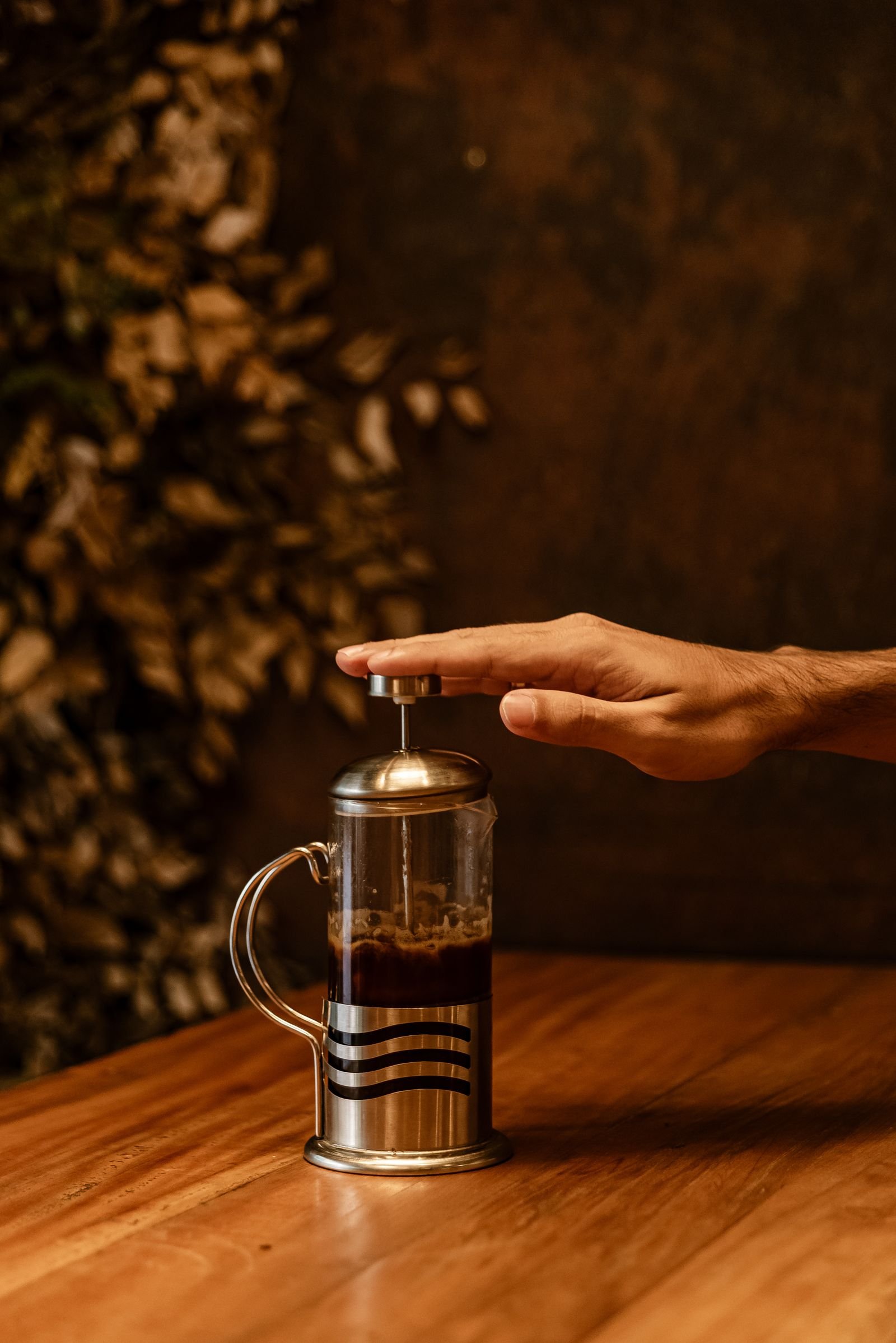
A french press coffee maker is the most forgiving brewing device for home use. It needs no paper filters, no precise pour technique, and no programmable timer. Just coarsely ground coffee, hot water, a four-minute wait, and a steady press down.
The result is a full-bodied cup with the natural oils intact, a rich, syrupy texture that paper filters remove. That is why a french press coffee maker remains popular among drinkers who want depth and mouthfeel without the fuss of manual drippers or expensive machines.
This guide covers five of the best french press models available in 2026 across budget, mid-range, and premium tiers. Each entry lists price, material, filter quality, and who it suits. A buying section breaks down material, capacity, and mesh choices, and a Yunnan-specific pairing note shows how light-roast and dark-roast beans behave differently in this brewer. Readers looking for technique detail should also check the french press coffee guide, while those curious about burr grinders that pair well with immersion methods can read the best coffee grinder review.
Why Choose a French Press Coffee Maker
A french press coffee maker outperforms other methods when body and oil retention matter most. The metal mesh filter lets micro-fine particles and caffeol compounds pass into the cup, which paper filters trap. That gives a heavier mouthfeel and a more rounded sweetness on the palate.
As James Hoffmann notes in his French press technique guide, the method’s simplicity masks its potential for producing cup-quality results that rival paper-filtered pour over – the key is coarse grind and a four-minute steep.
The process is also the simplest possible immersion technique. Coarse grind, room-temperature bloom for thirty seconds, pour boiling water, stir once, set a timer, press, serve. No gooseneck kettle required. No pour pattern to master. No paper waste.
Heat retention varies by material. Thick borosilicate glass holds temperature well enough for a slow sipper. Double-walled glass improves that further. Stainless steel is the most durable option and keeps heat the longest, though it sacrifices visibility into the brew.
A reader on a tight budget can start with a $15 glass press and upgrade later. The method does not demand premium gear to produce a satisfying cup. For drinkers who want clarity and tea-like brightness, a paper-filtered pour over remains the better route, but for those chasing richness and ease, the french press is hard to beat.
Best French Press Coffee Makers by Budget
The five picks below span the three tiers most home brewers encounter. Prices are typical retail ranges in 2026 and vary by material and region.
Budget Pick: Bodum Chambord
The Bodum Chambord is the benchmark for entry-level french press coffee maker design. Its double-track stainless steel mesh filter is widely regarded as one of the most reliable designs in this price band, and the heat-resistant borosilicate glass carafe is straightforward to clean.
Price range: $25–$35. Core traits: double-mesh plunger, borosilicate glass, 34 oz (1 L) capacity. Best for: daily drinkers who want reliable extraction without fuss.
Pros: proven filter design, affordable, easy to disassemble and clean. Cons: glass carafe is fragile, lid gasket ages and needs replacement after a couple of years.
Budget Pick: Muji Glass Coffee Press
The Muji Glass Coffee Press strips the design to its essentials: a cylindrical glass body, a simple plastic lid, and a basic mesh plunger. It lacks the dual-mesh refinement of the Bodum, but it brews well and costs less.
Price range: $12–$20. Core traits: single mesh filter, minimalist glass body, 35 oz capacity. Best for: ultra-budget buyers who value simplicity over features.
Pros: inexpensive, lightweight, clean aesthetic. Cons: single mesh lets more sediment through, plastic components feel cheap.
Mid-Range Pick: Fellow Carter French Press
The Fellow Carter shifts the material from glass to insulated stainless steel. The double-wall vacuum construction keeps water hot longer, which matters for drinks who prefer a slower sip. The filter assembly is upgraded to a four-layer micro-mesh that cuts sediment significantly compared with entry-level designs.
Price range: $50–$70. Core traits: vacuum-insulated steel, four-layer filter, 17 oz and 34 oz sizes. Best for: drinkers who prioritize temperature retention and a cleaner cup.
Pros: excellent heat retention, refined filter, durable construction. Cons: pricier than glass alternatives, narrower opening makes cleaning the bottom slightly awkward.
Mid-Range Pick: Hario Round French Press
Hario takes a different shape with the Round French Press, a bulbous spherical body rather than a straight cylinder. The wider lower chamber gives grounds more room to expand during bloom, and the rounded profile distributes heat more evenly than a narrow tube.
Price range: $30–$45. Core traits: spherical borosilicate body, stainless mesh, 34 oz capacity. Best for: brewers who want better bloom dynamics without paying premium prices.
Pros: unique shape aids even extraction, reasonably priced, glass is thick enough for daily use. Cons: the round form is less stackable for storage, single mesh compared with dual-mesh options.
Premium Pick: Camano Coffee Press
The Camano Coffee Press targets drinkers who treat the morning ritual as a daily practice worth investing in. Its heavy-gauge stainless steel body, reinforced filter housing, and replaceable mesh gaskets signal longevity that a budget french press coffee maker cannot match.
Price range: $80–$120. Core traits: 18/8 stainless steel, replaceable filter parts, 34 oz and 51 oz capacities. Best for: daily heavy users and gift buyers.
Pros: built to last, superior filter hardware, elegant brushed finish. Cons: high price for a method that needs little hardware refinement, heavy to transport.
Quick Comparison Table
| Model | Price | Material | Filter | Capacity | Best For |
|---|---|---|---|---|---|
| Bodum Chambord | $25–$35 | Borosilicate glass | Double-mesh steel | 34 oz | Daily home use |
| Muji Glass Press | $12–$20 | Borosilicate glass | Single mesh | 35 oz | Ultra-budget |
| Fellow Carter | $50–$70 | Insulated steel | Four-layer mesh | 17/34 oz | Heat retention |
| Hario Round | $30–$45 | Spherical glass | Single mesh | 34 oz | Even extraction |
| Camano Press | $80–$120 | Stainless steel | Replaceable mesh | 34/51 oz | Longevity |
The Bodum leads on value. The Fellow Carter leads on heat retention. The Camano leads on build quality. A buyer choosing between them should weigh budget against how often they brew and how much they care about sediment control.
How to Choose the Right French Press
Three variables matter most: material, capacity, and mesh quality.
By material, glass offers the best visibility and lowest cost but requires careful handling. Stainless steel is virtually unbreakable and retains heat better, though it hides the brew color. Double-walled glass sits in the middle: visible and insulated, but the cost approaches steel.
By capacity, single-cup drinkers should pick 12–17 oz models. Two-cup households benefit from 34 oz, and families or entertaining regularly should aim for 51 oz or larger. A press that is too small forces multiple batches and uneven extraction.
By mesh, the difference between a $20 press and a $70 press often comes down to filter construction. A single coarse mesh passes more fines and sediment. A double-mesh or multi-layer design catches more particles and yields a cleaner cup. Replacement filters cost between $5 and $15, so budget for that ongoing expense. Choosing the right french press coffee maker with a quality filter makes a noticeable difference in cup clarity.
The pour over coffee guide explains grind sizing for comparison. French press requires a noticeably coarser setting than any drip or immersion paper-method brewer.
Yunnan Beans & French Press Pairing
Yunnan coffee grows at 1000–2000 meters elevation, which produces beans with bright acidity and a clean structural backbone. Those characteristics translate differently through a french press than through paper-filtered methods.
Water-process Yunnan beans from Pu’er and Lincang tend toward tea-like clarity and black-tea notes. In a french press, that clarity persists but the body roundness added by the metal mesh gives the cup more weight on the palate. The acidity stays present but feels softer against the richer mouthfeel.
Sun-dried Yunnan beans from Pu’er and Baoshan carry fermentation-derived fruit sweetness and a heavier natural sugar profile. The french press amplifies that sweetness and adds a syrupy texture that paper filters would thin out. The result is a cup that reads closer to a fruit-forward espresso than a clean pour over.
Yunnan’s specialty-grade rate reached 41.7 percent in 2026 by R2 metrics, meaning the average commercial crop now carries enough quality consistency to justify the french press method without risking sour or underdeveloped notes. Coarse grinding, sea salt texture, and a water temperature of 92–94°C preserve the bean’s acidity while extracting the sugar fully.
The Yunnan coffee flavor profile guide maps these regional taste patterns in detail for readers who want to match bean origin to brew method.
Common French Press Mistakes to Avoid
The most common error is using a grind that is too fine. A medium-fine or espresso grind packed into a french press creates a sludge that pours through the mesh and turns the cup muddy and bitter. Coarse grind is non-negotiable: if the particles look like coarse sand or sea salt, the press will perform correctly. Any french press coffee maker benefits from this simple setting. The grind size directly controls extraction speed and sediment levels.
Steeping past five minutes is the second most frequent mistake. Extraction continues even after the plunger descends, so a six-minute steep pulls harsh bitterness from the grounds that a four-minute soak leaves behind. Set a timer and do not eyeball it.
Pressing too fast agitates the grounds and pushes fines back into suspension. Lower the plunger steadily over ten to fifteen seconds. A rush job creates cloudy coffee with bitter sediment at the bottom.
Leaving brewed coffee in the press after pressing is a slow extractor’s worst enemy. The remaining grounds continue drawing flavor out of the liquid. Pour the entire contents into a separate vessel immediately after pressing. Even thirty seconds of contact after the plunge worsens bitterness noticeably.
Neglecting cleaning causes rancid oil buildup. French press coffee contains more oil than filtered methods, and those oils go stale on the mesh and carafe walls within days. Disassemble and rinse after every use; soak the plunger assembly weekly in warm soapy water.
How to Clean and Care for Your French Press
After each brew, disassemble the plunger and separate the mesh rings. Rinse all parts under warm water and use a soft brush to remove stuck grounds from the mesh pores. A drop of mild dish soap is enough; avoid abrasive pads that scratch glass or steel.
Once per week, soak the plunger assembly in a solution of one tablespoon baking soda per cup of warm water for twenty minutes. This dissolves the oily residue that regular rinsing misses. Rinse thoroughly and air-dry before reassembly.
For glass carafes, avoid thermal shock. Do not pour boiling water into a cold glass press, and do not place a hot carafe under cold running water. Warm the glass gradually by rinsing with hot water first.
Stainless steel bodies tolerate rougher handling but still benefit from prompt cleaning. Coffee oils left on steel develop a dull film that affects taste over time. A microfiber cloth with a drop of neutral cleaner restores the finish without scratching.
Store the press fully dry with the lid off. Trapped moisture encourages mold inside the mesh housing and weakens rubber gaskets.
Make Your First French Press Brew Today
A french press coffee maker rewards patience more than precision. The brewer asks for three things: coarse grind, four-minute steep, and a steady press, and returns a cup with body and sweetness that other methods struggle to match. With the right technique, even an entry-level unit delivers results that rival machines costing five times as much.
Budget buyers should start with the Bodum Chambord or Muji Glass Press. Daily users who value heat retention should consider the Fellow Carter. Those willing to invest in longevity should look at the Camano Coffee Press. Every tier delivers a genuinely good cup when paired with a proper burr grind and correct timing.
For readers who want to understand how grind size affects each brewer across methods, the coffee brewing methods overview compares french press alongside pour over, cold brew, and automatic drip in a single reference. Selecting the right french press coffee maker depends on how often you brew and what texture you prefer in your cup.
FAQ
What is the best french press coffee maker for beginners?
The Bodum Chambord is the simplest choice because its double-mesh plunger delivers consistent results with minimal technique. The Muji Glass Press is the cheapest viable entry point at under $20.
Glass vs stainless steel french press, which is better?
Glass gives better visibility and costs less but requires careful handling. Stainless steel retains heat longer and survives drops. Double-walled glass combines visibility and insulation but raises the price.
How long should coffee steep in a french press?
Four minutes is the standard. Steeping past five minutes introduces noticeable bitterness. Use a timer rather than estimating by eye.
What grind size is best for french press?
Coarse grind, similar in texture to sea salt. Fine or medium grinds clog the mesh and produce sediment-filled, over-extracted coffee.
Can you use pre-ground coffee with a french press?
Yes, but pre-ground coffee stales quickly and loses aromatic compounds within days of grinding. Whole bean ground immediately before brewing produces a noticeably sweeter and more aromatic cup.
How do you clean a french press properly?
Disassemble after each use and rinse the mesh under warm water. Soak the plunger weekly in baking soda solution to remove accumulated oils. Never skip cleaning. Rancid oil ruins every subsequent brew.
Leave a Reply