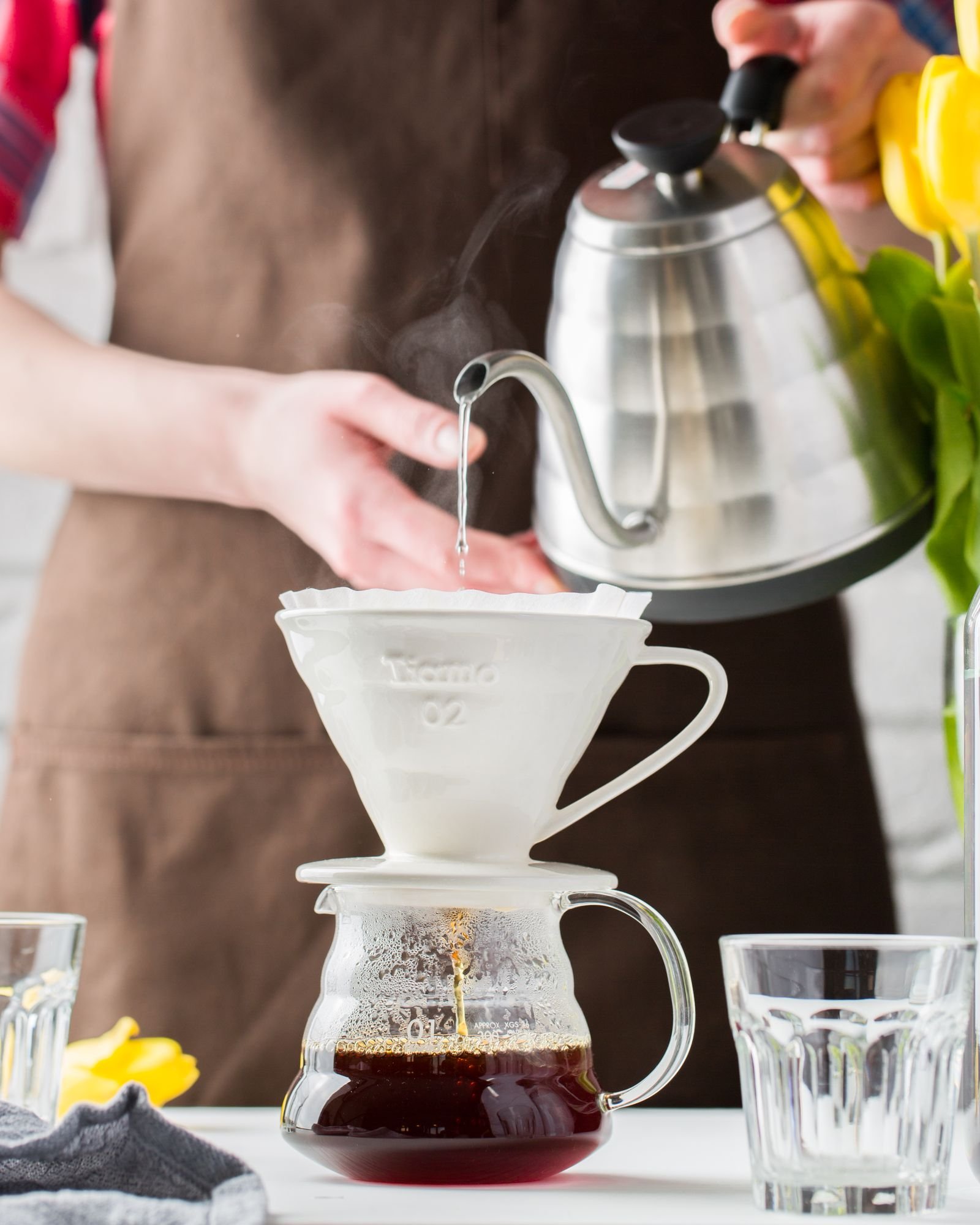
A pour over coffee maker is the simplest path to a clean, controlled cup at home. The method is manual drip brewing: hot water passes through ground coffee held in a cone or flat-bottom filter, then drips into a carafe or mug. No pumps, no pods, no programmable timers.
Just the brewer, a filter, ground coffee, and a steady hand with the kettle. The appeal is full control over water flow, temperature, and brew time, which lets the brighter notes of a coffee come through without the heaviness that immersion methods can leave behind.
This guide reviews five of the best pour over coffee makers available in 2026, spanning budget and premium price tiers, so a reader can match gear to taste and budget without trial and error.
What Makes a Great Pour Over Coffee Maker
Three factors separate a satisfying pour over from a frustrating one: flow control, material, and filter type. Flow control depends on the kettle more than the brewer, but the brewer’s geometry sets the ceiling.
A narrow gooseneck spout lets the brewer pour a thin, even stream, which keeps the coffee bed evenly saturated. The brewer itself shapes how water moves through the grounds.
Material affects heat retention and flavor neutrality. Borosilicate glass stays inert and shows the coffee as it brews, but it loses heat faster than ceramic or metal. Ceramic holds temperature well and feels stable on the counter.
Stainless steel is durable and retains heat, though it can impart a faint metallic note if the walls are thin. Plastic, often dismissed, is actually prized by competition baristas because it holds heat better than glass and costs little.
Filter type is the biggest lever on cup character. Thick paper filters, like those used in a Chemex, strip oils and fine sediment for a tea-clear cup.
Thin cone papers, used in a Hario V60, let more body through while still clarifying. Flat-bottom filters, used in a Kalita Wave, balance the two. Reusable metal mesh filters, used in some Bodum models, keep more oils in the cup and produce a heavier body with no paper waste.
Budget tiers run roughly as follows. Entry level sits under $20 and covers basic cones and plastic drippers. Mid range spans $20–$50 and includes ceramic and glass brewers with better build.
Premium reaches $50 and above for larger glass carafes and high-end metal designs. A reader new to the method can start cheap and upgrade later.
Those exploring the method in depth can read the pour over coffee brewing guide for step-by-step technique.
Top 5 Pour Over Coffee Makers
The five brewers below cover the range of materials, filter styles, and price points a home brewer is likely to weigh.
Each entry lists a price range, core traits, the drinker it suits, and a short pros and cons view.
Chemex Classic
The Chemex Classic is the most recognizable pour over design on the market, with its bonded glass hourglass shape and a wooden collar tied with leather.
It uses thick proprietary paper filters that produce an exceptionally clean cup, often described as tea-like in clarity. A single 8-cup Chemex holds about 40 ounces, enough for four to five mugs.
Price range: $40–$50. Core traits: borosilicate glass body, thick bonded paper filter, 8-cup capacity. Best for: drinkers who prize clarity and a light body, and who brew for a small group.
Pros: stunning design, effortless clean cup, easy to clean. Cons: fragile glass, proprietary filters cost more than standard cones, slow pour rate.
Hario V60
The Hario V60 is a conical dripper with a wide top and a spiral ridge interior that guides water down through a single large hole.
Its fast flow rewards technique and suits brewers who want to experiment with grind, pour speed, and ratio. It ships in plastic, ceramic, glass, and metal, so the price scales with material.
Price range: $8–$45 depending on material, with plastic at the low end and metal at the high end. Core traits: cone shape, 60-degree angle, paper or cloth filter, sizes 01 and 02. Best for: brewers who enjoy tuning variables.
Pros: cheap to start, huge aftermarket of filters and accessories, excellent clarity. Cons: unforgiving technique, plastic version feels light, ceramic and glass break easily.
Kalita Wave
The Kalita Wave uses a flat-bottom design with three small extraction holes and a matching wave-shaped paper filter.
The flat bottom keeps water contact even, which makes the brew more repeatable than a cone. That stability is why many cafes choose it for training.
Price range: $25–$55. Core traits: flat bottom, three holes, stainless or ceramic body, 155 and 185 sizes. Best for: beginners who want consistent results without finicky pouring.
Pros: forgiving and repeatable, even extraction, good heat retention in ceramic. Cons: less room to experiment, proprietary wave filters, smaller batches.
Bodum Pour Over
The Bodum Pour Over Coffee Maker uses a reusable stainless steel mesh filter, skipping paper entirely.
Ground coffee sits in a metal filter inside a glass carafe, and the user pours water by hand. The result is a fuller body with more oils, closer to a French press cup than a paper-filtered one.
Price range: $20–$30. Core traits: glass carafe, reusable stainless steel mesh filter, no paper needed. Best for: eco-minded drinkers who dislike buying filters and who like a heavier body.
Pros: zero filter cost, simple, durable carafe. Cons: sediment in the cup, metal filter clogs and needs thorough cleaning, less clarity than paper.
Melitta Pour Over
The Melitta Pour Over is the quiet value leader, built on the cone filter system that the brand pioneered.
A simple plastic or ceramic cone sits on a mug or carafe, takes a standard #2 or #4 paper filter, and produces a clean cup for a few dollars. It is the brewer many start with and few regret.
Price range: $10–$20. Core traits: cone shape, standard paper filters, mug or carafe compatible. Best for: first-time brewers and travelers who want a foolproof, packable setup.
Pros: cheapest entry, widely available filters, easy cleanup. Cons: basic build, plastic version feels flimsy, no thermal retention.
Pour Over Coffee Maker Comparison Table
The table below compresses the five picks into a single view for quick comparison. Prices are typical retail ranges in 2026 and vary by material and retailer.
| Brewer | Price Range | Material | Filter Type | Capacity | Score |
|---|---|---|---|---|---|
| Chemex Classic | $40–$50 | Borosilicate glass | Thick bonded paper | 8 cups (40 oz) | 9.2 / 10 |
| Hario V60 | $8–$45 | Plastic / ceramic / glass / metal | Cone paper or cloth | 1–4 cups | 9.0 / 10 |
| Kalita Wave | $25–$55 | Ceramic / stainless steel | Flat-bottom paper | 1–4 cups | 8.8 / 10 |
| Melitta Pour Over | $10–$20 | Plastic / ceramic | Standard cone paper | 1–4 cups | 8.5 / 10 |
| Bodum Pour Over | $20–$30 | Glass + steel mesh | Reusable metal mesh | 4–8 cups | 8.3 / 10 |
Scores reflect clarity of cup, build quality, ease of use, and value. The Chemex leads on cup quality, the V60 on versatility, and the Melitta on value.
A drinker who wants one brewer to grow with should weigh the V60; a drinker who wants the cleanest cup should weigh the Chemex.
How to Choose the Right Pour Over Coffee Maker
Choice comes down to three questions: budget, taste, and setting.
By budget, the entry under $20 tier covers Melitta and plastic V60, both enough to learn the method. The $20–$50 tier adds ceramic and glass options with better feel and heat retention.
At the top of the range ($40 and up), the Chemex and premium Kalita deliver design and capacity for those who brew often or for guests.
By taste, a drinker who wants a clean, tea-like cup should choose thick-paper brewers such as the Chemex. A drinker who wants more body and oils should choose a metal mesh brewer such as the Bodum. A drinker who wants balance and repeatability should choose the Kalita Wave.
By setting, home brewers who entertain benefit from the Chemex capacity. Travelers and office users benefit from the light Melitta or a plastic V60. Daily solo brewers do well with any 1–4 cup dripper.
Grind matters as much as the brewer. A burr grinder set to a medium fine setting suits cone brewers, while a slightly coarser setting suits flat-bottom brewers.
The best coffee grinder guide explains which grinders pair well with pour over and why burr grinders beat blade grinders for consistency.
Essential Accessories for Pour Over Coffee
The brewer is only half the setup. Four accessories lift a pour over coffee maker from acceptable to great.
A gooseneck kettle is the single most important upgrade. Its narrow spout gives precise flow control, which keeps the coffee bed evenly saturated and prevents channeling. A variable temperature model that holds 90–96°C removes guesswork.
A digital scale with 0.1-gram precision turns brewing from intuition into repeatable recipe. Weighing both coffee and water lets a drinker lock a ratio such as 1:16 and reproduce a good cup every time.
A timer, built into many scales or on a phone, tracks bloom and total brew time. A typical pour over blooms for 30–45 seconds, then draws down over two to three minutes.
Extra filters prevent a ruined morning when the last paper is used. Stocking the correct size, whether Chemex, V60 02, or Kalita 185, avoids mismatch.
According to YunOrigin’s coffee gear guides, the grinder and kettle do more for cup quality than the dripper itself, so a buyer on a tight budget should spend there first.
The gear guide to coffee grinders covers kettles and scales in the same series.
Pour Over vs Other Brewing Methods
A pour over coffee maker sits between two common alternatives: French press and automatic drip.
Against a French press, pour over trades body for clarity. The French press steeps grounds in water and uses a metal screen, so oils and fine sediment stay in the cup and the body is heavy.
Pour over filters those out, yielding a lighter, brighter cup. A drinker who likes a robust cup may prefer the French press coffee guide, while a drinker who likes clarity will stay with pour over.
Against an automatic drip machine, pour over trades convenience for control. A drip machine automates temperature and timing but locks the user into its defaults.
Pour over puts every variable in the user’s hands, which is why it appeals to those who enjoy the ritual. The trade is time and attention: a machine brews unattended, while pour over asks for two to three minutes of pouring.
For a full walkthrough of the manual method itself, the pour over coffee guide covers ratios, water temperature, and pour technique step by step.
FAQ
What is the best pour over coffee maker for beginners?
The Kalita Wave is the most beginner friendly because its flat bottom and three holes make extraction even and forgiving. The Melitta cone is the cheapest way to start and is nearly foolproof.
A new brewer should avoid the Hario V60 until technique is comfortable, since its single hole and fast flow punish mistakes.
Chemex vs V60: which is better?
Neither is better in absolute terms. The Chemex gives a cleaner, tea-like cup and looks like a centerpiece, but needs proprietary filters and breaks easily.
The V60 is cheaper, more versatile, and easier to travel with, but demands better pouring skill. Choose Chemex for cup clarity, V60 for flexibility.
Do you need a gooseneck kettle for pour over?
A gooseneck kettle is strongly recommended. Its narrow spout controls flow precisely, which is the core skill in pour over.
A regular kettle pours too fast and unevenly, causing channeling and sour or bitter cups. The kettle matters more than the dripper for most home results.
How often should you replace pour over filters?
Paper filters are single use and should be replaced every brew. Reusable metal mesh filters, such as the Bodum type, should be rinsed after each use and deep cleaned with a soak every few weeks to prevent clogging and off flavors.
Can you use a regular kettle instead of gooseneck?
Yes, but with caveats. A regular kettle works in a pinch if the user pours slowly and in circles, though control is poor. For consistent results, a gooseneck kettle is worth the cost. Some drinkers practice with a regular kettle and upgrade later.
What grind size works best with pour over?
A medium grind, between table salt and sand, suits most pour over brewers. Cone drippers like the V60 prefer medium fine, while flat-bottom brewers like the Kalita prefer medium.
Burr grinders hold the size steady; blade grinders scatter the particles and cause uneven extraction.
Conclusion
The best pour over coffee maker depends on what a drinker values. The Chemex Classic wins on cup clarity and design.
The Hario V60 wins on versatility and price range. The Kalita Wave wins on repeatability for beginners. The Bodum Pour Over wins on zero filter cost and full body. The Melitta Pour Over wins on value and simplicity.
A buyer should start from budget and taste, then pick the brewer that matches. Those who want the cleanest cup should reach for the Chemex. Those who want to learn and experiment should reach for the V60. Those who want an easy daily brewer should reach for the Kalita.
Good gear only helps if the coffee is ground well. The complete coffee grinder guide explains which grinders pair with these brewers and how to set them.
With the right brewer, a good grinder, and a gooseneck kettle, a home pour over coffee maker can match many cafes.
Leave a Reply