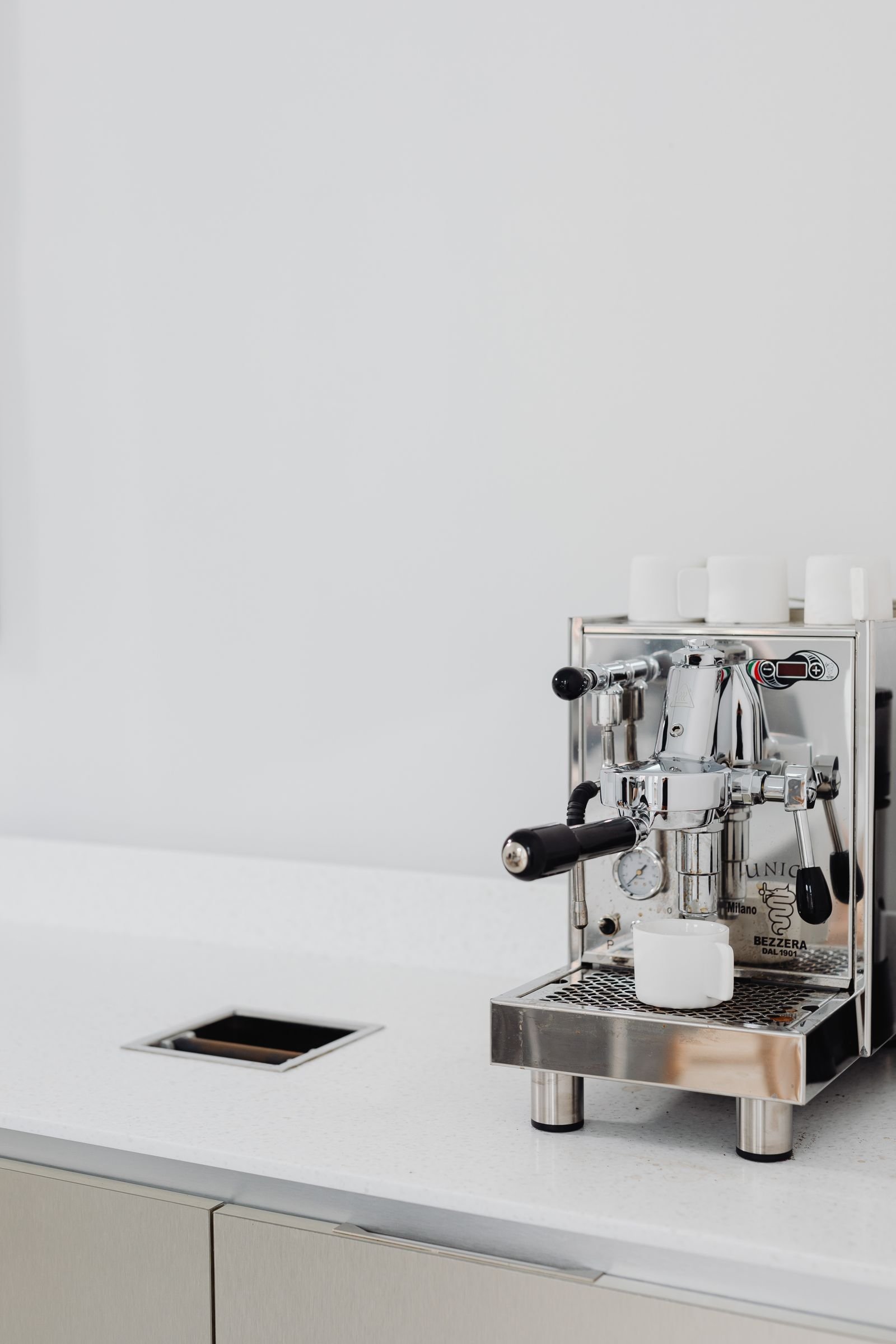
An espresso machine turns beans into concentrated coffee in twenty-five to thirty seconds by forcing hot water through finely ground, tamped coffee at nine bars of pressure. The result is a small, intense shot topped with crema: the golden-brown foam of emulsified oils and dissolved gases that signals a properly extracted espresso.
Making espresso at home is simpler than most drinkers assume. The equipment range spans $150 starter pumps to $3000 lever machines, and a $300 semi-automatic produces shots that rival most cafe drinks when paired with a decent burr grinder and correct technique.
This guide covers three machine types: manual lever, semi-automatic, and super-automatic, and five specific models across budget, mid-range, and premium tiers. A buying section walks through frequency, space, and maintenance trade-offs, while a Yunnan-specific pairing note explains which bean profiles suit espresso extraction best. Readers interested in grind setup should also read the best coffee grinder review, and those exploring other home methods can consult the coffee brewing methods overview.
Why Make Espresso at Home
The economics favor home espresso immediately. A specialty cafe espresso drink costs $4 to $6 per cup. A home setup producing two drinks daily at roughly $0.50 per cup pays for itself within three to six months depending on usage and machine price.
Control is the second advantage. Cafe machines are dialed for volume, not individual preference. At home, the drinker adjusts grind size, dose, water temperature, and pull time to match personal taste. A shot that tastes sour at one setting becomes balanced at the next. Something impossible to achieve with a fixed-program machine.
The ritual itself attracts many buyers. Grinding, dosing, tamping, and pulling a shot is a deliberate, repeatable process that marks the start of a morning routine. For hobbyists, that process is the product as much as the caffeine.
As the SCA Golden Cup standards define extraction parameters, a properly pulled espresso should yield 8–12 grams of liquid from 18–20 grams of coffee in 25–30 seconds at 9 bars of pressure. Machines like the Breville Barista Express make it straightforward to hit those targets at home.
Types of Espresso Machines
Espresso machines divide into three categories defined by how much automation they provide and how much skill they require.
Manual lever machines place every variable in the operator’s hands. The user controls spring tension, pull speed, and pressure profiling through physical force on a lever. Output quality depends entirely on technique. These machines range from $500 entry-level Italian levers to $3000+ boutique models from brands such as La Pavoni, Rocket, and Slayer.
Semi-automatic machines automate pump pressure while leaving dose, grind, tamp, and pull time to the operator. This is the dominant category for home users, roughly 70 percent of home espresso buyers choose semi-automatics. Prices span $200 to $1000, with leading brands including Breville, De’Longhi, and Gaggia.
Super-automatic machines grind, tamp, extract, and often steam milk at the touch of a button. Output quality is consistent but capped by the machine’s internal grinder and extraction chamber. These machines cost $500 to $2000 and are led by Jura, Philips, and De’Longhi’s Magnifica line.
| Type | Price Range | Skill Required | Output Quality | Best For |
|---|---|---|---|---|
| Manual lever | $500–$3000+ | High | Very high | Enthusiasts |
| Semi-automatic | $200–$1000 | Medium | High | Daily home users |
| Super-automatic | $500–$2000 | Low | Medium-high | Convenience seekers |
Best Espresso Machines by Budget
Budget Pick: De’Longhi Stilosa
The De’Longhi Stilosa enters the market at approximately $200 and delivers baseline espresso capability without frills. Its 15-bar pump generates sufficient pressure for acceptable extraction, and the manual frother produces microfoam adequate for cappuccinos and lattes.
Price range: $180–$230. Core traits: 15-bar pump, manual frother, thermoblock heating, 2L removable water tank. Best for: casual drinkers transitioning from drip coffee.
Pros: affordable, compact footprint, widely available replacement parts. Cons: no PID temperature control, manual frother requires technique, single-boiler limits simultaneous steam-and-brew.
Budget Pick: Breville Bambino
The Breville Bambino targets the same price band but adds 3-second heat-up time and an automatic microfoam wand that removes the steaming technique barrier. The thermocoil heating system reaches extraction temperature faster than most budget boilers.
Price range: $200–$250. Core traits: 3-second heat-up, automatic steam wand, 54 mm portafilter, compact design. Best for: users who want latte capability without learning steam technique.
Pros: fast heat-up, automatic frothing, smaller footprint than most competitors. Cons: plastic build feels light, 54 mm basket is non-standard for aftermarket upgrades.
Mid-Range Pick: Breville Barista Express
The Breville Barista Express integrates a conical burr grinder into the machine body, eliminating the separate grinder purchase that budget buyers otherwise need. The built-in grinder offers sixty grind settings and a dose-control grinding system that adjusts output by weight.
Price range: $450–$550. Core traits: integrated conical burr grinder, 15-bar Italian pump, digital temperature control (PID), 1800W thermocoil. Best for: drinkers who want an all-in-one setup without premium pricing.
Pros: grinder included, PID temperature stability, strong build quality. Cons: built-in grinder limits upgrade path, cleaning the integrated burrs requires disassembly.
Mid-Range Pick: De’Longhi Dinamica Plus
The Dinamica Plus occupies the super-automatic half of the mid-range segment. It grinds, tamps, extracts, and steams milk automatically, producing consistent results with zero manual intervention beyond bean loading and water filling.
Price range: $500–$650. Core traits: one-touch recipes, LatteCrema system, customizable strength and temperature, app connectivity. Best for: users prioritizing convenience over customization.
Pros: truly hands-off operation, consistent output, touch screen interface. Cons: limited manual control, integrated grinder cannot be upgraded separately, descaling cycles frequent.
Premium Pick: Breville Barista Pro
The Breville Barista Pro steps up to premium with a faster thermocoil (three-second heat-up), a digital lock-flat grind gauge that displays grind consistency in real time, and a more powerful steam wand for professional-quality microfoam.
Price range: $600–$750. Core traits: 3-second heat-up, grind gauge display, commercial-style steam wand, sleek stainless design. Best for: daily enthusiasts who want cafe-quality output at home.
Pros: fastest heat-up in class, intuitive grind feedback, excellent steam power. Cons: price premium over Barista Express, still single-boiler architecture.
Premium Pick: Lelit Anna
The Lelit Anna shifts from thermocoil to dual-boiler construction: one boiler dedicated to brewing, one to steaming. This eliminates the temperature wait between pulling a shot and steaming milk, and maintains stable brew temperature regardless of steam demand.
Price range: $700–$900. Core traits: dual boiler, PID control on both boilers, E61-style group head, rotatory pump option available. Best for: drinkers who pull multiple drinks per session and want temperature stability.
Pros: true dual-boiler stability, professional-grade group head, upgradeable to rotary pump. Cons: larger footprint, higher price, steeper learning curve than pump-fed models.
How to Choose the Right Espresso Machine
Three dimensions determine the right choice: frequency, counter space, and maintenance willingness.
By frequency, single-cup daily drinkers need only a budget or mid-range machine. Multi-cup households or entertainers benefit from dual-boiler or super-automatic models that eliminate waiting between drinks. Heavy weekend hosts should budget for a premium machine with fast recovery time.
By space, compact urban kitchens favor the Breville Bambino or De’Longhi Stilosa. Countertops with generous depth can accommodate the Barista Express or Lelit Anna without crowding. Super-automatics typically need more vertical clearance for bean hoppers and milk systems.
By maintenance, super-automatic machines demand the least daily effort but require descaling cycles and cleaning tablet programs on schedule. Semi-automatics need daily portafilter rinsing, weekly group-head backflushing, and monthly grinder cleaning. Lever machines sit somewhere in between: fewer electronic components to fail but more manual cleaning of the group head and portafilter.
For readers weighing grinder importance alongside machine choice, the best coffee grinder guide explains why a $200 burr grinder often matters more than upgrading from a $400 machine to a $600 machine.
Yunnan Beans & Espresso Pairing
Yunnan’s 1000–2000 meter elevation produces beans with moderate acidity and a clean structural backbone. Characteristics that adapt well to espresso extraction when roasted appropriately.
Water-process Yunnan beans from Pu’er and Lincang carry tea-like cleanliness and blackberry or stone-fruit notes. Under espresso pressure, those fruity tones compress into a syrupy sweetness with a chocolatey finish. A medium roast brings out the cocoa and nutty base while preserving enough acidity to keep the shot from tasting flat.
Sun-dried Yunnan beans from Pu’er and Baoshan lean toward fermented fruit sweetness and heavier body. Under espresso, the fermentation notes deepen into brown-sugar and dried-fruit sweetness, while the natural process heavier body translates into a thicker, more persistent crema. These beans reward a slightly darker roast that amplifies the caramel and chocolate notes.
Yunnan’s 41.7 percent specialty-grade rate in 2026 means even commercial-grade crops carry enough quality to produce acceptable espresso shots, though sourcing certified specialty lots lifts crema density and flavor complexity noticeably. A medium-dark roast, 18–20 gram double dose, and a 25–30 second pull time produce a balanced shot from most Yunnan lots.
The Yunnan coffee flavor profile guide details regional taste differences for readers selecting beans specifically for espresso.
Common Espresso Mistakes to Avoid
Grinding too coarse, that is too coarse, is the most common beginner error. Coarse espresso grind produces under-extracted, sour, thin shots with pale crema. The grind should resemble fine sand or table salt, significantly finer than pour over or french press settings.
Under-dosing is the second mistake. A standard double shot requires 18 to 20 grams of coffee. Doses below 16 grams produce weak, watery extraction regardless of grind adjustment. A scale priced at $20 eliminates this variable entirely.
Uneven tamping creates channeling: water finding the path of least resistance through the puck. The result is a simultaneously sour and bitter shot with uneven extraction. Tamp level, firm, and consistent. A $30 spring-loaded tamper removes guesswork.
Insufficient preheat causes temperature instability. Thermo-block machines reach extraction temperature in seconds, but group heads and portafilters need time to thermalize. Pull a blank shot through the group head before locking in the portafilter to warm both components.
Skipping daily cleaning causes oil buildup that ruins flavor over time. Espresso oils are potent and turn rancid within days. Backflush with cleaning tablets weekly, rinse the group head gasket daily, and wipe the steam wand immediately after each use.
How to Clean and Maintain Your Espresso Machine
Daily maintenance requires three steps: run a blank flush through the group head, rinse the portafilter and basket, and wipe the steam wand with a damp cloth while it is still warm. These take two minutes and prevent most flavor degradation.
Weekly maintenance involves backflushing the group head with a blind filter and espresso cleaning tablet. This pushes cleaning solution through the valve and solenoid to dissolve accumulated coffee oils. Follow the machine manual’s cycle: typically three five-second bursts followed by a thirty-second soak, repeated three times.
Monthly maintenance includes descaling if water hardness warrants it. Hard water deposits restrict flow and insulate heating elements, reducing performance over time. Use a descaling solution formulated for espresso machines. Vinegar damages internal seals.
Grinder maintenance depends on type. Burrs should be removed and brushed clean monthly. Blade grinders need less frequent attention but produce inconsistent particle size that no amount of cleaning improves; upgrading to a burr grinder is the only fix for blade-grinder inconsistency.
Store the machine dry with the water tank emptied if not used for more than a week. Residual water promotes mineral buildup and bacterial growth inside the lines.
Make Your First Shot Today
An espresso machine rewards the investment of time and attention disproportionately to its cost. A $200 machine paired with a $100 burr grinder produces drinks that surpass most chain-cafe output when the operator learns basic technique.
Budget buyers should consider the De’Longhi Stilosa for manual control or the Breville Bambino for automated steaming. Mid-range drinkers who want an integrated grinder should choose the Barista Express. Convenience-first users should evaluate the Dinamica Plus. Daily enthusiasts willing to learn should target the Barista Pro or Lelit Anna.
The french press coffee guide offers a contrast: immersion brewing versus pressure brewing, for readers who want to understand why the same Yunnan bean tastes different across methods.
FAQ
What is the best espresso machine for beginners?
The Breville Barista Express is the strongest beginner choice because its integrated grinder removes one variable, and the PID temperature control stabilizes extraction. The De’Longhi Stilosa is the cheapest viable entry point at around $200.
Semi-automatic vs super-automatic espresso machine, which is better?
Semi-automatics produce higher-quality shots and allow full parameter control but require learning technique. Super-automatics deliver consistent results with zero skill but cap output quality and limit customization. Choose semi-automatic for quality, super-automatic for convenience.
How long does it take to make espresso?
A single shot pulls in 25–30 seconds. Total time including grind, dose, tamp, preheat, and cleanup ranges from 5 minutes for experienced users to 15 minutes for beginners. Super-automatic machines reduce active time to under one minute.
What grind size is best for espresso?
Very fine, resembling powder or fine sand: approximately ten times finer than pour over grind. The exact setting depends on bean density, roast level, and machine pressure, so adjust in 0.5-step increments until extraction time lands between 25 and 30 seconds.
Can you use Yunnan coffee beans for espresso?
Yes. Yunnan beans roast well to medium-dark and produce chocolate, nut, and dried-fruit notes that suit espresso extraction. Water-process beans yield cleaner shots; sun-dried beans yield sweeter, heavier bodies. Both benefit from a dose of 18–20 grams and a 25–30 second pull.
How do you clean an espresso machine properly?
Rinse the portafilter and wipe the steam wand after every use. Backflush the group head weekly with a cleaning tablet. Descale monthly or bi-monthly depending on water hardness. Clean the grinder burrs monthly. Never skip these steps. Oil buildup is irreversible once hardened.
Leave a Reply